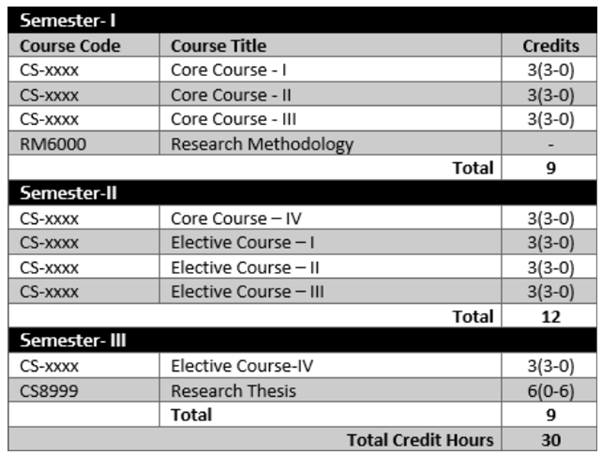
Graduates will develop a deep understanding of theoretical and computational mathematics, equipping them with the ability to model, analyze, and solve complex real-world problems across diverse domains. They will effectively integrate mathematical principles with emerging technologies such as big data, artificial intelligence, and cryptography, thereby fostering interdisciplinary innovation. In addition, graduates will engage in high-quality research and collaborate with academic and industry experts to contribute meaningfully to advancements in applied mathematics and related fields.
Program Learning Outcomes (PLOs)
The graduates will be able to:
- Apply advanced theoretical, applied, and computational mathematics to model, analyze, and solve complex real-world problems in science, engineering, finance, and technology-driven fields.
- Integrate mathematical principles with emerging technologies such as data science, artificial intelligence, cryptography, and cybersecurity to develop innovative and interdisciplinary solutions.
- Conduct independent and collaborative research using appropriate mathematical methodologies, critically evaluate results, and contribute to advancements in applied mathematics and related domains.
- Communicate mathematical concepts, research outcomes, and technical solutions effectively while demonstrating professional, ethical, and leadership skills for careers in industry, research, and academia.