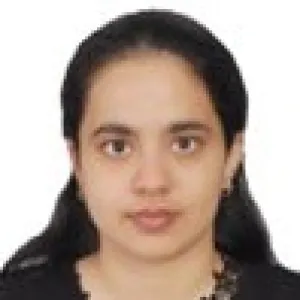
I am Hajra Ahmad, Lecturer in the Department of Computer Science at the National University of Technology (NUTECH), Rawalpindi, Pakistan. I hold a Master's degree in Data Science from Germany and a Bachelor's degree in Electrical Engineering, reflecting an interdisciplinary academic foundation that spans applied mathematics, machine learning, and natural language processing.
My teaching encompasses courses in Artificial Intelligence and Machine Learning at undergraduate level. I am committed to delivering technically rigorous instruction that connects foundational theory to real-world applications, with a particular emphasis on preparing students to engage critically with modern AI systems.
Lecturer, Department of Computer Science, National University of Technology (2024–Present)
- Teach undergraduate programs in Computer Science, Artificial Intelligence and Software Engineering
- Advise students on industrial and research projects related to Computer Science and Artificial Intelligence
I have taught a variety of undergraduate courses in Computer Science, Artificial Intelligence and Software Engineering Department. Below are the courses I have been involved in teaching:
- Machine Learning
- Data Mining
- Artificial Intelligence
- Digital Logic Design
My research interests lie at the intersection of natural language processing, AI for education, and conversational AI, with a unifying focus on building AI systems that are data-efficient, robust, and deployable in real-world settings.
My foundational research concerns the challenge of learning reliable NLP models from limited and noisy annotations, a problem of practical urgency wherever expert labelling is expensive or scarce. My Master's thesis demonstrated that iterative pipelines combining topic modelling, clustering refinement, and cross-lingual data augmentation can substantially improve downstream classification performance, while revealing that the quality of intermediate text representations is the primary determinant of augmentation effectiveness. I am interested in principled approaches to representation learning, weak supervision, and synthetic data generation that generalize across domains and languages.